
Long before the British ringfenced large tracts of Uganda as protected areas, local people inhabited these areas and lived alongside wildlife. One such group is the Banyaruguru community of Rubirizi, in the balkanized territory of Bushenyi, where in the past few years suspected poachers have allegedly disappeared or been killed inside Queen Elizabeth National Park.
It is said that the best place to commit a bloody crime is inside a national park, because hyenas and other beasts will clean up the evidence. If that is the case, then it applies in strange ways to the Banyaruguru, a community of hunters who are finding it increasingly hard to nurture the practice of hunting that’s essential to who they are and how they perceive themselves. Queen Elizabeth National Park, the crown jewel of Uganda’s protected areas, is increasingly unsafe for hunters as game rangers and other law enforcement personnel tighten the noose around them in expanding efforts to protect wildlife.
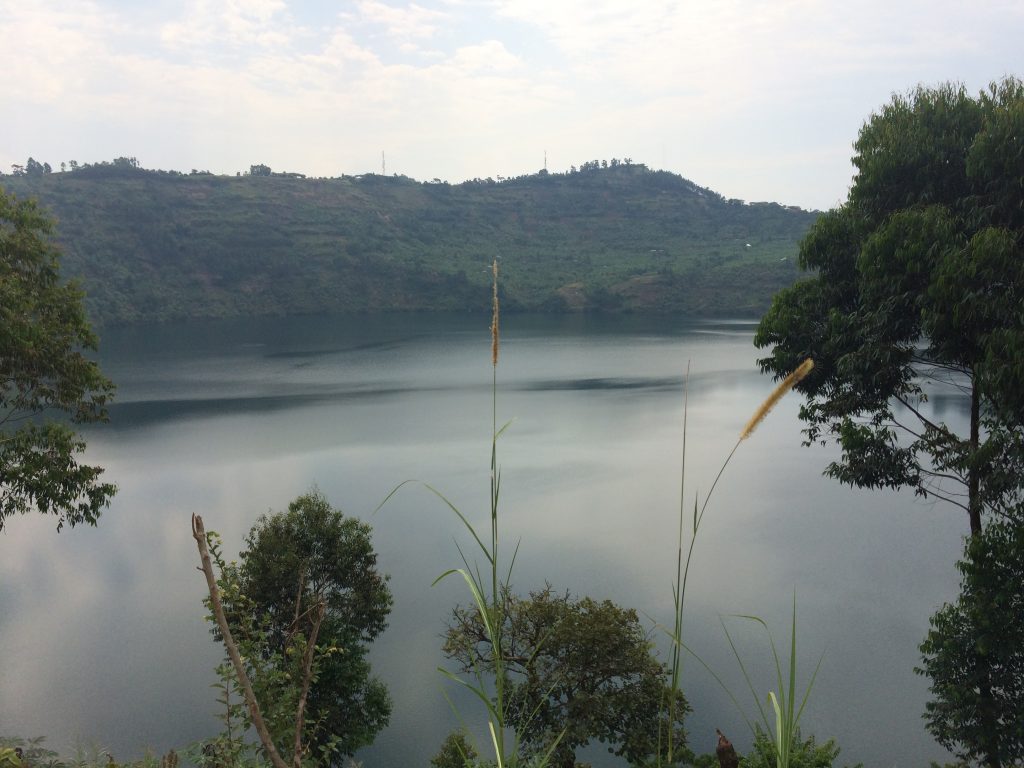
I first traveled to Rubirizi in early 2018 as I researched illegal wildlife trade as a possible topic for my doctoral studies. One is immediately struck by the beauty of the landscape: the many crater lakes that seem to float on the horizon, the thick forests, the savannah plains stretching into the distance. But, more than anything, it is the Banyaruguru people themselves who fascinate, so that it seems illogical for one to claim to enjoy the land’s sights and sounds without paying due respect to the people themselves. Immediately I was drawn into talk of tensions between locals and wildlife authorities who increasingly were deploying technological innovations, including the latest spy apps, to thwart hunters encroaching on the park.
Yet, even with the explosion of such technological capabilities as the hunters are up against, could the authorities really outmaneuver them? Are their policing efforts sustainable in the long term? More fundamentally, when does one raised to be a hunter cross the line into the criminal terrain of a poacher?
My sense is that hunting, even when it becomes poaching, is not how the Banyaruguru misbehave. In fact it is how they have long behaved, a tradition they could not renounce any more than a little boy could be asked to give up his mother. Rather than seeing communities such as the Banyaruguru as problematic poaching hotspots and consequently breeding resentment over the perception that animals are treated better, understanding the ways of life of these communities can offer a window into alternative conservation approaches that don’t mimic those inherited from the colonial era.
Doubtless the colonial administrators who herded the Banyaruguru people out of the park had little or no respect for their spiritual practices, and there is ample evidence of the suffering of this and other communities after they were forced out of their ancestral lands. By the time the British came local populations had thrived in these areas for hundreds of years. In some places the gazettement of vast spaces of land as protected areas was opportunistic, with authorities taking advantage of epidemics such as sleeping sickness to order mass evacuations of people from infested areas. Records from the LEGCO, the colonial-era national assembly, show legislators asking the governor to allow locals to return to their ancestral lands when the epidemics were over. Those pleas were always in vain.
And yet Uganda’s Game Department, established in 1925, was reaping the rewards of abundant wildlife at the expense of dislocated — and dispossessed — local communities. Down the years, the department derived its revenues from a system of export permits for game trophies as well as the sale of rhinoceros horns, hippopotamus teeth, colobus monkey skins, blue duiker skins, and buffalo hides.
So it was that, while wealthy white foreigners were allowed to hunt trophies, indigenous hunting methods were criminalized. The Game Department applied what has been described as “a fortress model,” summed up as the forceful removal and exclusion of local people who had traditionally relied on such spaces for their livelihood. The exclusion inevitably led to the loss of spiritual sanctuaries.
The methods adopted in running the Game Department were often military in nature, just as the officers themselves had a military background. What followed was the enactment of strict laws in the form of ordinances and legal notices that prohibited local people from accessing protected areas. It is precisely because of such exclusionary practices and strict laws that the Banyaruguru people were known to refer to Queen Elizabeth National Park as ‘Omukiragiro kya paka,’ or the place where the law was enforced. This fortress model, with its militarized tendency and the lingering threat of fines or shooting deaths, was inherited after independence in 1962. Today the Uganda Wildlife Authority is implementing more or less the same model, with mixed results. How to effectively deal with poachers remains very much a hard question for some.
But is it really?
The ways of life and cultural practices of local communities often point to the fact that when they cross into protected areas, they are not necessarily coming as irrational resource extractors. The Banyaruguru have taboos, regulations, sacred places, non-edible species or dietary prohibitions, and even totemic attachments to many animals. But to what extent have taboos and other unwritten regulations been integrated in conservation programs? One interesting taboo is related to luck, which is considered vital for hunting missions.
Among the Banyaruguru, when a male child grew up and got married, the father, uncle or grandfather would hand him a spear, a practice locally known as okucimbira icumu. Spears in the Banyaruguru community are used for protection and are a core part of traditional regalia in households. Being given a spear marked the transition from boyhood to adulthood in the old days. Spears also happen to be the preferred hunting weapon, and some Banyaruguru who spoke to me described the honor of being descendants of families in whose veins eshagama empiigi, or hunting blood, flows. Not surprisingly, reinforcing the view of the Banyaruguru as bushmeat hunters, some parts of Rubirizi are named after wild animals.
Poaching is thus a spiritual affair for this ethnic group without a monotheistic religion. The Banyaruguru possessed and believed in many gods or deities (emandwa) that they beseeched for different reasons and events: hunting, harvests, childbirth, rain, peace and so on. Naturally the hunting deity, kayiigi, is revered. Those hunters who spoke to me explained how kayiigi is consulted for guidance, blessings and protection before entering the park. There is widespread belief that this deity guides hunters regarding how to enter and exit the park, as well as which paths to follow. Kayiigi is said to send signals in case of danger, so that the god can bless or curse a mission. Those who are known to possess the authority of that deity usually are deployed at the frontline in hunting missions. Another deity, murari, is believed to keep the wives of the poachers faithful during dangerous missions. Among those who spoke to me, there was a tendency to believe that adulterous wives invited bad luck for hunters in the form of death, injury and unsuccessful missions. A polygamous man plotting a hunting mission will aim to sleep as much as possible at the house of the woman considered to have ekibero kirungi, which literally refers to a lucky thigh. Those believed to suffer bad luck are avoided altogether, so that even to meet one casually on the way into the park is seen as quite ominous. As one poacher said, “You tie some leaves and throw them towards their direction. That means that you have tied the bad luck and thrown it back, and then you can continue with your mission.” Other signs similarly portending misfortune include sightings of a guinea fowl, a dead person, a dog or a lion. The hunting mission is aborted in any portentous case, with older people in hunting groups serving as enforcers.
There are other poaching-related rules, unwritten but significant in terms of regulating behavior. I was told of poachers who erect spears overnight and then watch to see if they will collapse on the floor, a clear sign that any mission into the park will be doomed. Similarly, dreams of rangers running after you, or dogs being hesitant to join you as you enter the park, are all warning signals that older poachers follow.
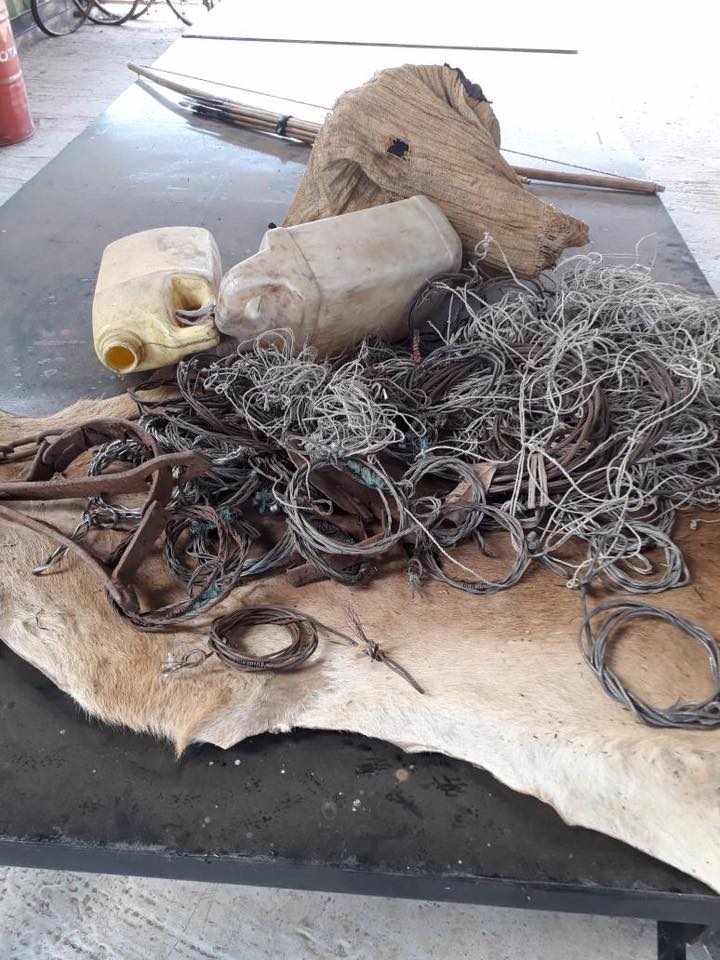
Traditional approaches to protecting biodiversity require incredible investments in time and financial resources. While these have been at the heart of anti-poaching efforts over the years, there is documented evidence showing how such approaches pit local communities against wildlife authorities, create anger and resentment, and alienate the very communities without whose support these conservation efforts are doomed to fail. Understanding the spiritual inclinations of hunting communities is key to building trust as part of wider efforts that may still include the electronic gadgetry that even some rangers don’t like using.
Allegations to the contrary notwithstanding, in interviews and ethnographic studies many poachers tend to come across as thoughtful. They exercise agency and are capable of organizing themselves in hierarchical structures for hunting missions. They may often be illiterate but they are not stupid. Some, among the Banyaruguru hunters, are uncommonly intelligent, oracles in their communion with the earth as well as with each other. I found them excellent students of animal anatomy as well as behavior, and the best hunters among them rely on all their senses to conceal themselves from rangers as much as the animals they are hunting.
One frequently hunted animal, the hippopotamus, deserves mention. A favorite of many hunters, in the sense that they want to eat it, the animal is affectionately known as kinywani kya bwita, which means its cooked meat is good accompaniment for millet-and-cassava bread. Those who spoke to me said they valued its organic meat that is also thought to boost fertility among women. Others said the animal’s flesh is just medicine for whatever ails the body. No one knows how many hippos populate water bodies in and around Queen Elizabeth National Park, but certainly there are too many to count. Does it really matter if one, wandering too far from shore, is speared to death? Can an outsider claim to love this beast more than the Banyaruguru themselves do?
It occurred to me many times during my field work in Rubirizi that almost everyone there had a hippo story, for this semiaquatic mammal is very much a ubiquitous presence in the landscape that life itself is inconceivable without it. A bit like friendship, so to speak. Children confessed to having eaten and savored hippo meat. Old men described their longing for kinywani. One hunter even had the nerve to say to me one day, “The day you taste hippo meat, you will quit your (studies) and come join us in hunting.”
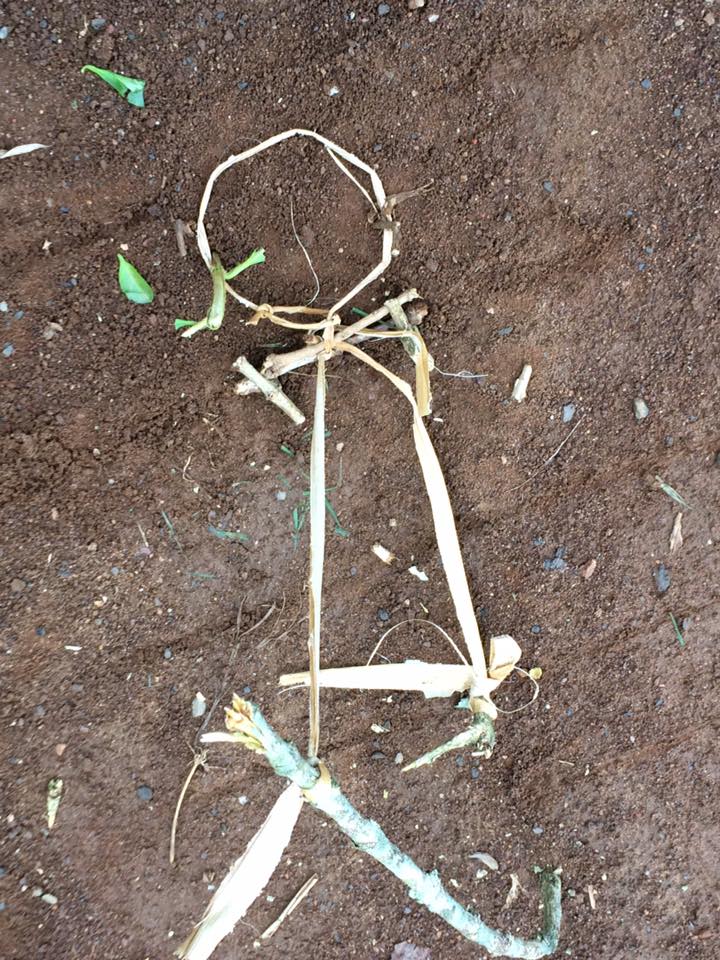
Cover image: A hunter’s illustration of a basic trap; courtesy of Ivan M. Ashaba